Since the establishment of Southern University of Science and Technology (SUSTech), SUSTech has long been a leader in the development of its academic disciplines. Its adherence to world-class university standards has seen SUSTech focus on the forefront of discipline development and departmental construction.
While many recognize the development of SUSTech’s science and engineering disciplines, SUSTech has attached great importance to the development of the study of the humanities and social sciences. Earlier this year, SUSTech established the College of Humanities and Social Sciences of SUSTech (hereinafter referred to as “the College”) was formally established, with Chair Professor Chen Yuehong as the Dean. It reflects the exploration of a new path of reform in the integration of the humanities and arts education with sciences, engineering, and medicine for higher education in China for the new era.
The College currently oversees the Centers for the Humanities, the Social Sciences, Language Education and Higher Education Research. Through one integrated unit, Dean Chen Yuehong administers a multidisciplinary research approach and reinvests in humanities and arts education that is gradually taking shape at SUSTech.
?Focused and outstanding – the development of the College of Humanities and Social Sciences
When Dean Chen Yuehong was announced as the inaugural Dean of the College of Humanities and Social Sciences, he said it was a great honor and new experience, particularly given that SUSTech is such a young and innovative university with its unique features.
One thing that makes SUSTech distinct from other universities in China is the size of its faculty body. Instead of developing a large faculty, it has focused on developed a talent pipeline that is small, precise, focused, distinctive and outstanding. Dean Chen Yuehong believes that a similar approach is vital to the development of the College of Humanities and Social Sciences at SUSTech.
“Only by adhering to the features of integrating sciences and the humanities and arts education can we find a new path for their mutual development at science and technology universities in the new era.”
He believes that it is imperative to have a small and focused academic team that provides a fundamental general education and multidisciplinary research directions.
The work of the College has combined the compulsory general education courses required by the Ministry of Education with a wide range of electives that cultivate future leaders with a global, innovative outlook. Classes on ethics, critical thinking, professional writing and communication prepare SUSTech students for life beyond their time on campus, ensuring their transformation into imaginative and innovative individuals that will be highly prized by industry in years to come.
The College plans to offer professional courses in the future, as well as provide SUSTech students the opportunity to take a second major in a liberal arts area. The Society of Fellows in the humanities and arts has attracted top doctoral researchers from around China and the globe to SUSTech to undertake research on campus.
The College has the support of SUSTech to promote multidisciplinary research with top disciplines across campus. There are several projects under way, including in disciplines as diverse as archaeology, science fiction writing, intelligent language, big data in education, and the industrialization of cultural innovation and creativity.
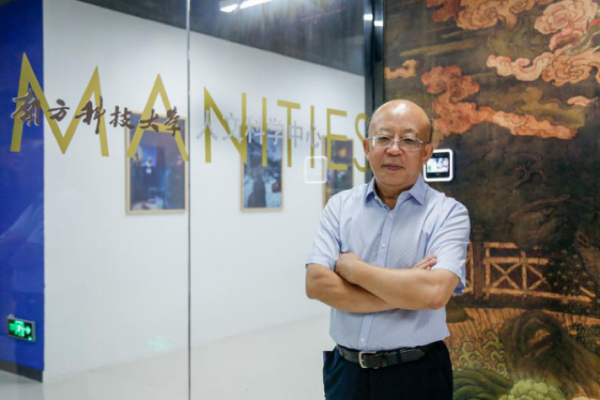
There are numerous opportunities to be seized from the development of the Greater Bay Area and the recent statement about Shenzhen by the State Council. The College of Humanities plans to take advantage of these prospects to get involved in the cultural development of Shenzhen.
What do you mean by reinvesting in the humanities and arts education?

Chen Yuehong is proud to say that he and SUSTech brought the concept to the forefront of people’s mind three years ago. When SUSTech held the Forum on Humanities and Arts Education in World-class Science and Engineering Universities: Opportunities and Challenges last year, the experts and scholars agreed that first class science and engineering universities must promote first-class humanities and arts education.
For Chen Yuehong, it requires a more open approach to the humanities and arts that encourages integration with the sciences, engineering. In his view, innovative future leaders need to have a multidisciplinary knowledge base that covers both the natural and social sciences in order to be independent innovators so craved by society. At the same time, new liberal arts education should develop with an outward facing eye. By learning from other top liberal arts departments around the world, everyone can progress together.
“It is not enough to regard humanities and arts as a mere accomplishment. In modern times, cultural knowledge and language are critically important, and known as cultural capital,” said Chen Yuehong.
The recent Statement by the State Council about Shenzhen encouraged the development of culturally creative industries and tourism. This is a perfect juxtaposition with the concept of new liberal arts education, as creative and cultural industries generate hundreds of billions of dollars every year. The transformation of liberal arts resources into a productive market force is indispensable in the further makeover of the Chinese economy under the influence of the Fourth Industrial Revolution.
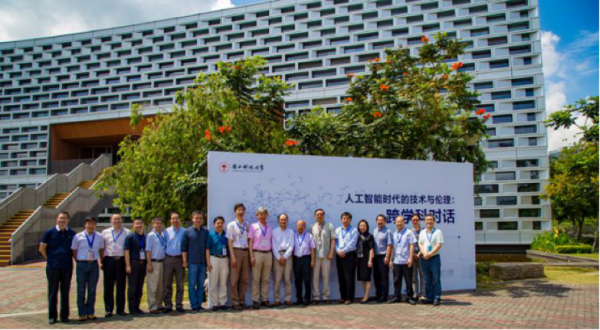
A perfect example of the integration of the natural and social sciences was the Technology and Humanities in the Age of Artificial Intelligence: Interdisciplinary Dialogue seminar. This seminar brought together computer scientists and social scientists to discuss the development of interdisciplinary research in computational humanities. Similarly, the Social Science Center worked with Assistant Professor Zhou Youmin (Ocean Science and Engineering) and BGI on an archaeological project seeking to make progress on a series of bottlenecks.
With the interdisciplinary and multidisciplinary approach taken by Chen Yuehong and the College, several research institutions have been set up, covering many different areas. He hopes that these provide a platform for SUSTech to promote an intersectional approach to new liberal arts education.
Humanities and arts education nurtures future innovative talents
Nowadays, with the rapid development of science and technology, artificial intelligence, quantum science, biology and other science disciplines are facing ethical challenges in the process of development. The development of science and technology is a double-edged sword, which can bring benefits to human beings as well as disasters to human society. Therefore, ethical, humanistic and moral concerns, as well as the aesthetic meanings of human life, are of particular importance, which is precisely what humanities education pays attention to.
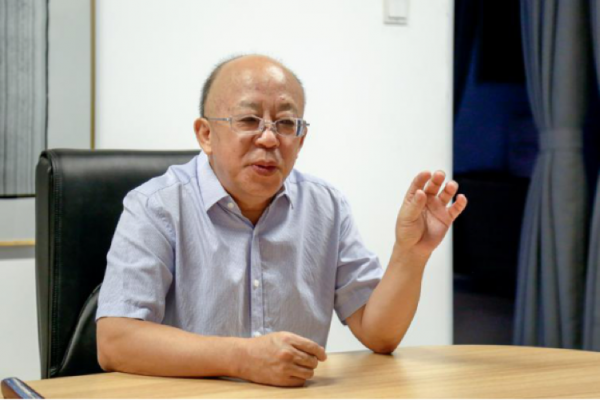
Chen Yuehong said that humanities education will play a key role in fostering first-class innovative talents with “native land emotion, global vision, comprehensive literacy and innovative ability”.
“The essence of the development of science and technology is to bring prosperity to the nation and to bring a rich and decent life to the common people. When cultivating top-notch innovative talents, we should not only let them grasp the frontier knowledge of scientific and technological development, but also understand the needs of the country, the nation and human society, and possess correct values, ethics and dreams. Only in this way can the talents truly be engaged in the scientific and technological work and truly contribute their valuable strength for the country and the nationality.” Chen said.
The subtle influence of a liberal arts education can be felt throughout campus. Chen Yuehong believes that progress takes time, but is proud of the achievements he has achieved thus far. He reflected on the success found in the Writing and Communication course offered to the Class of 2022, which was filled far quicker than any other course in Shenzhen’s history. Other courses number 150 students, and the summer semester classes are full of enthusiastic students. With an increasing focus on the liberal arts across campus, the College of Humanities aims to gradually provide 180 high-quality courses covering between six and eight thousand students per academic year.
When Chen Yuehong first arrived at SUSTech from Peking University three years ago, he saw teams of just three or four people in the centers. He now manages a College of more than 60 full time, adjunct and part-time lecturers, along with honorary fellows and research assistants. This is an accurate representation of not only Shenzhen speed but also SUSTech speed.
He hopes that in the near future, the College of Humanities and Social Sciences will become a model for the flourishing development of humanities and social sciences colleges and institutes within science and engineering universities across China. Within ten years, Chen Yuehong aims for the College to become the most distinctive, first-class and internationally renowned one within a science and engineering university in the world.